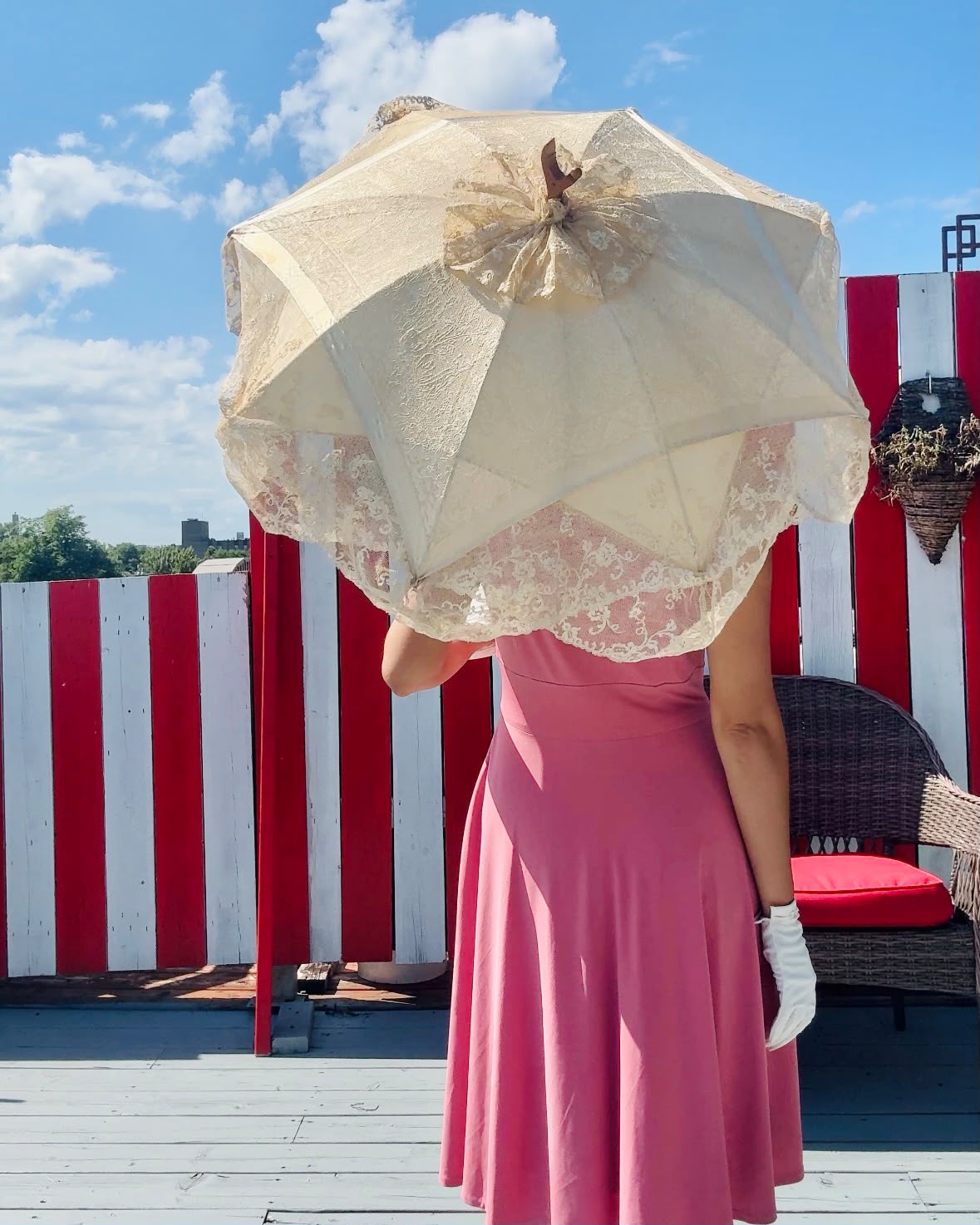
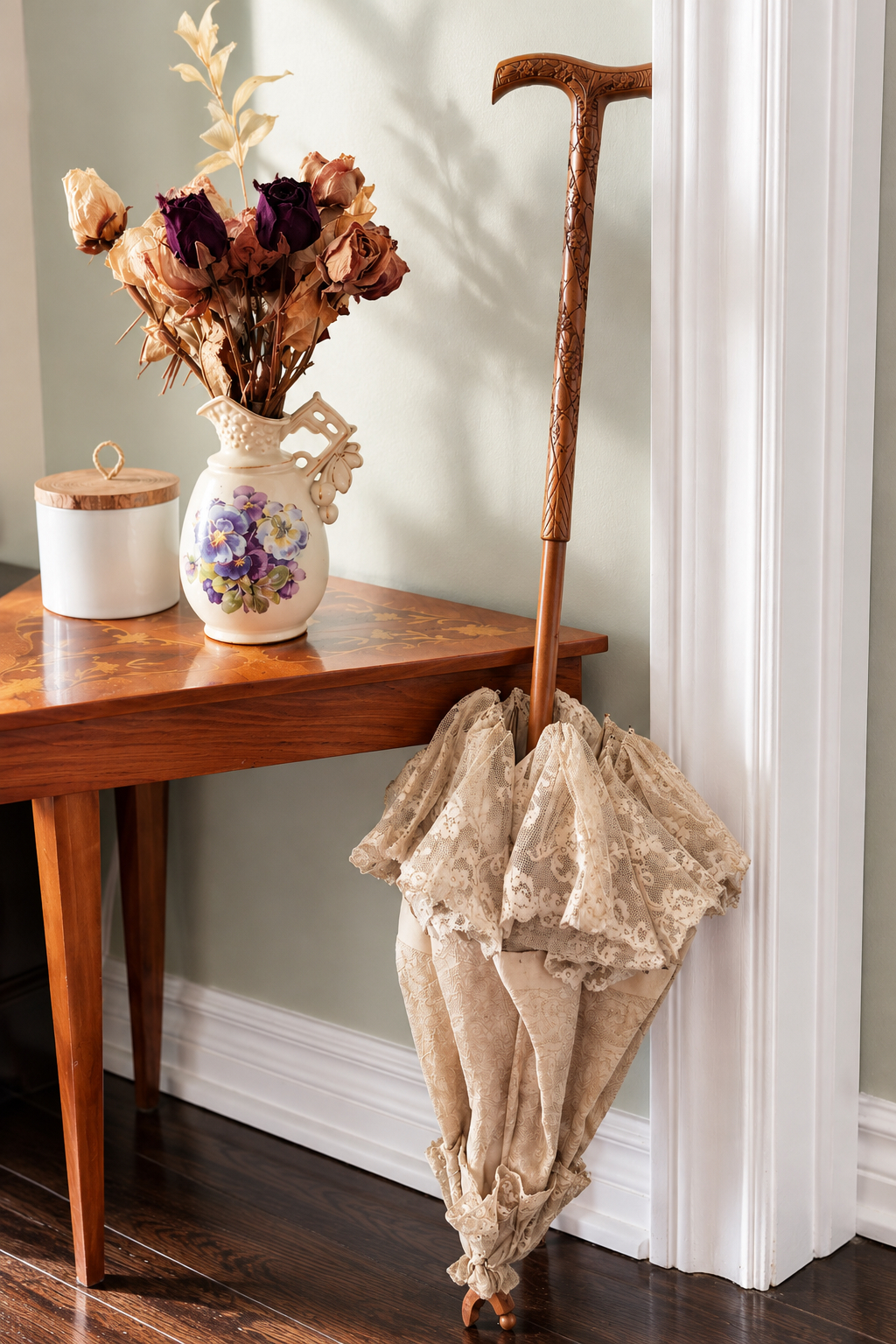
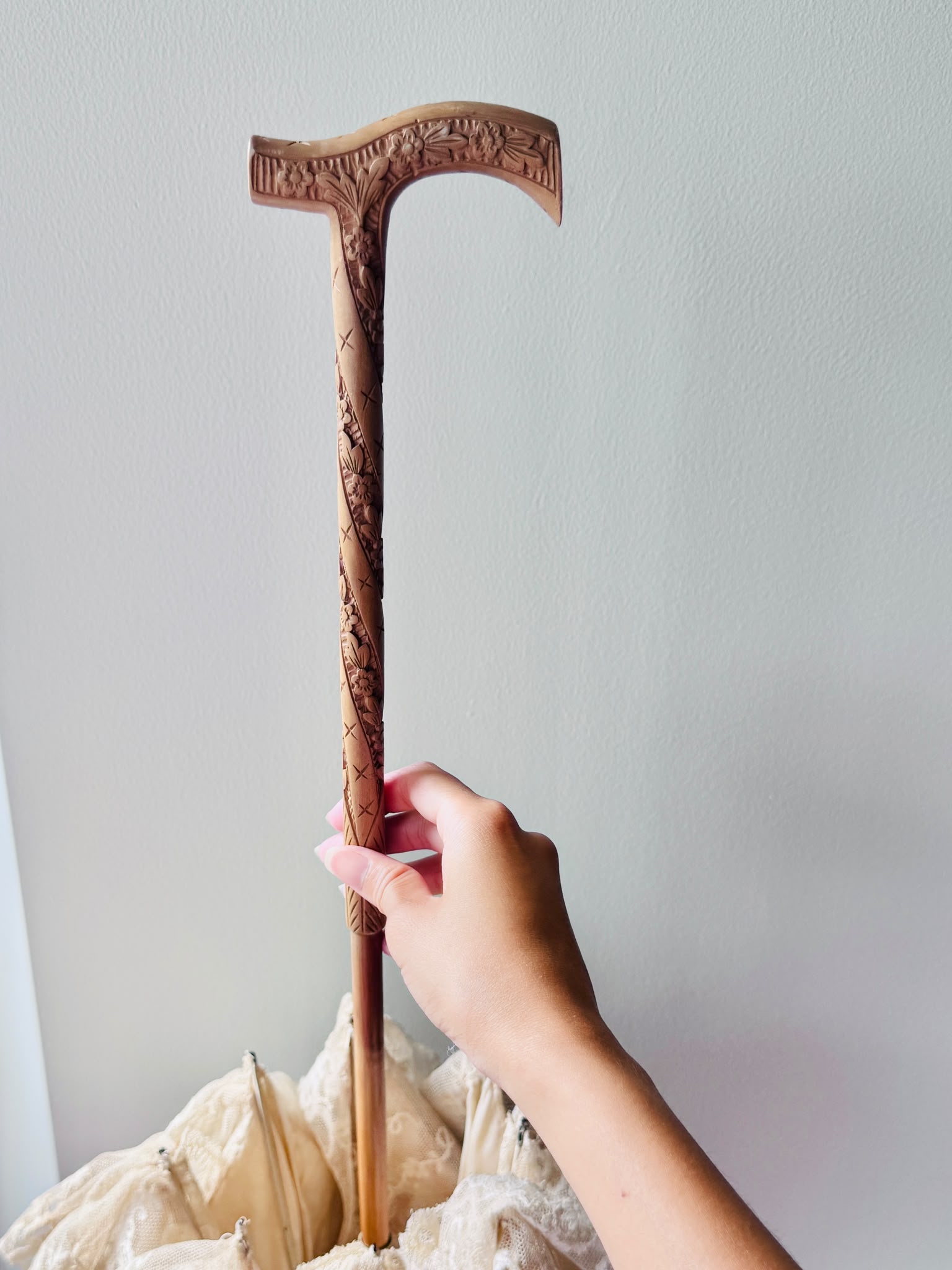
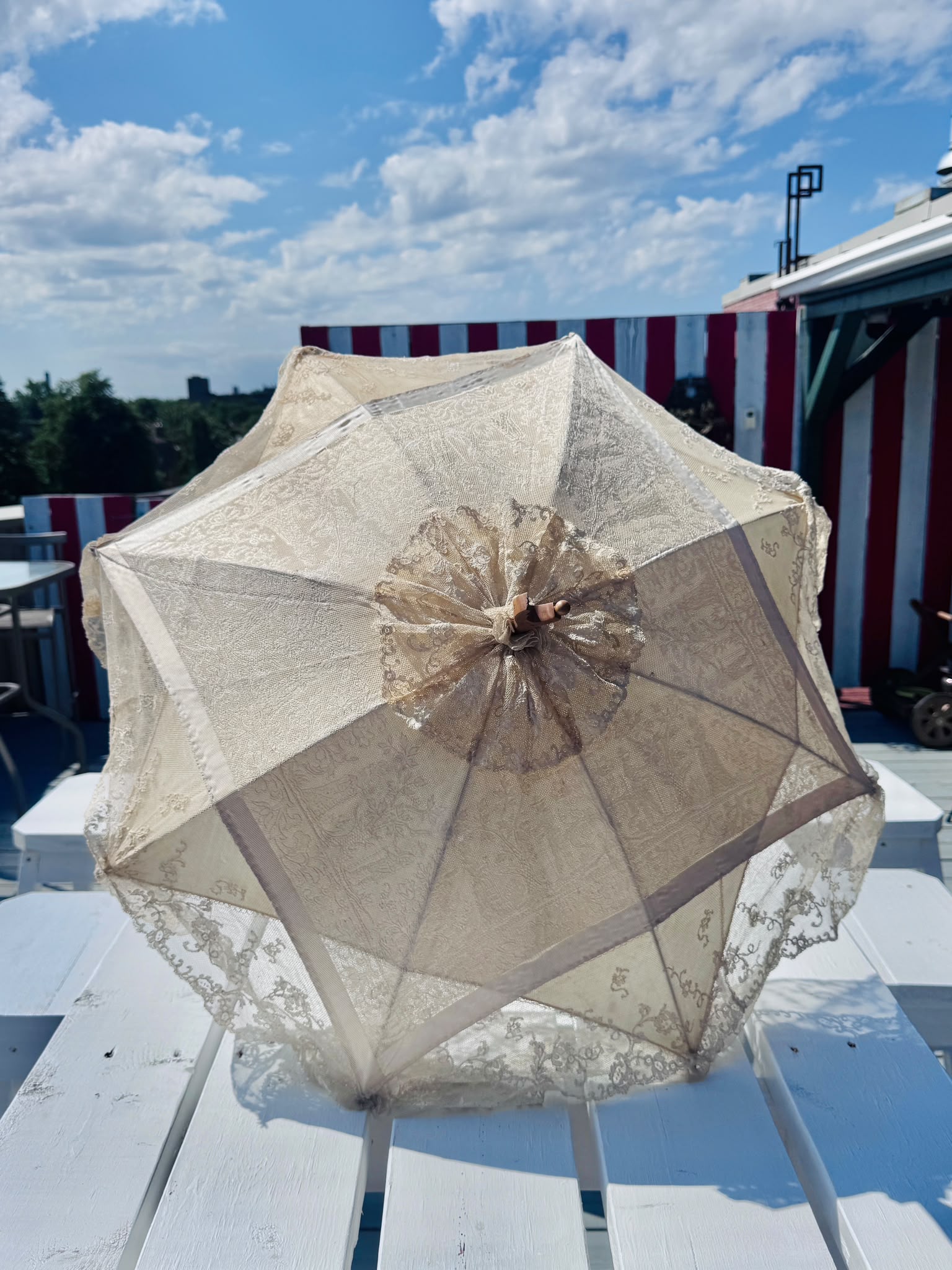

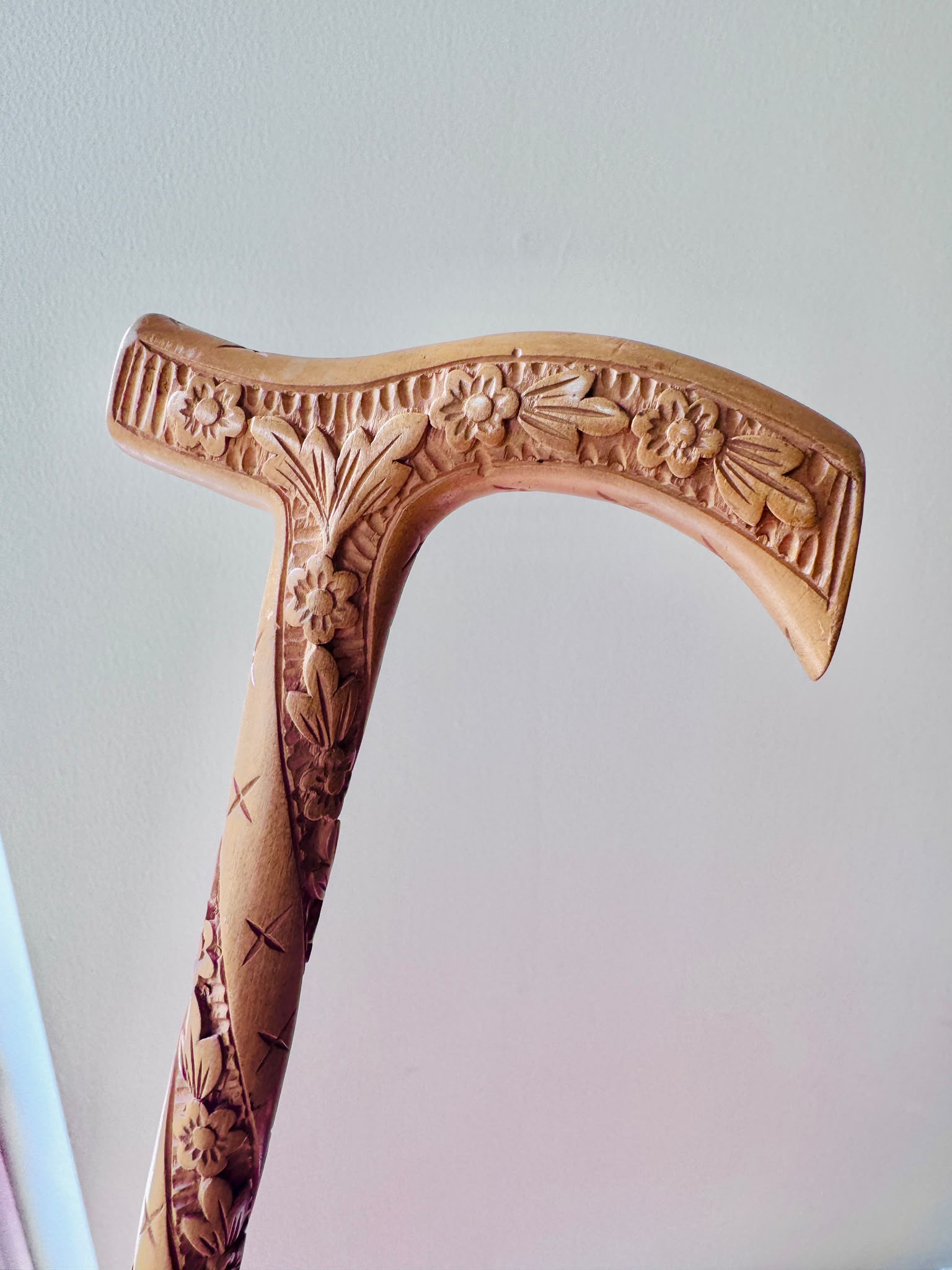
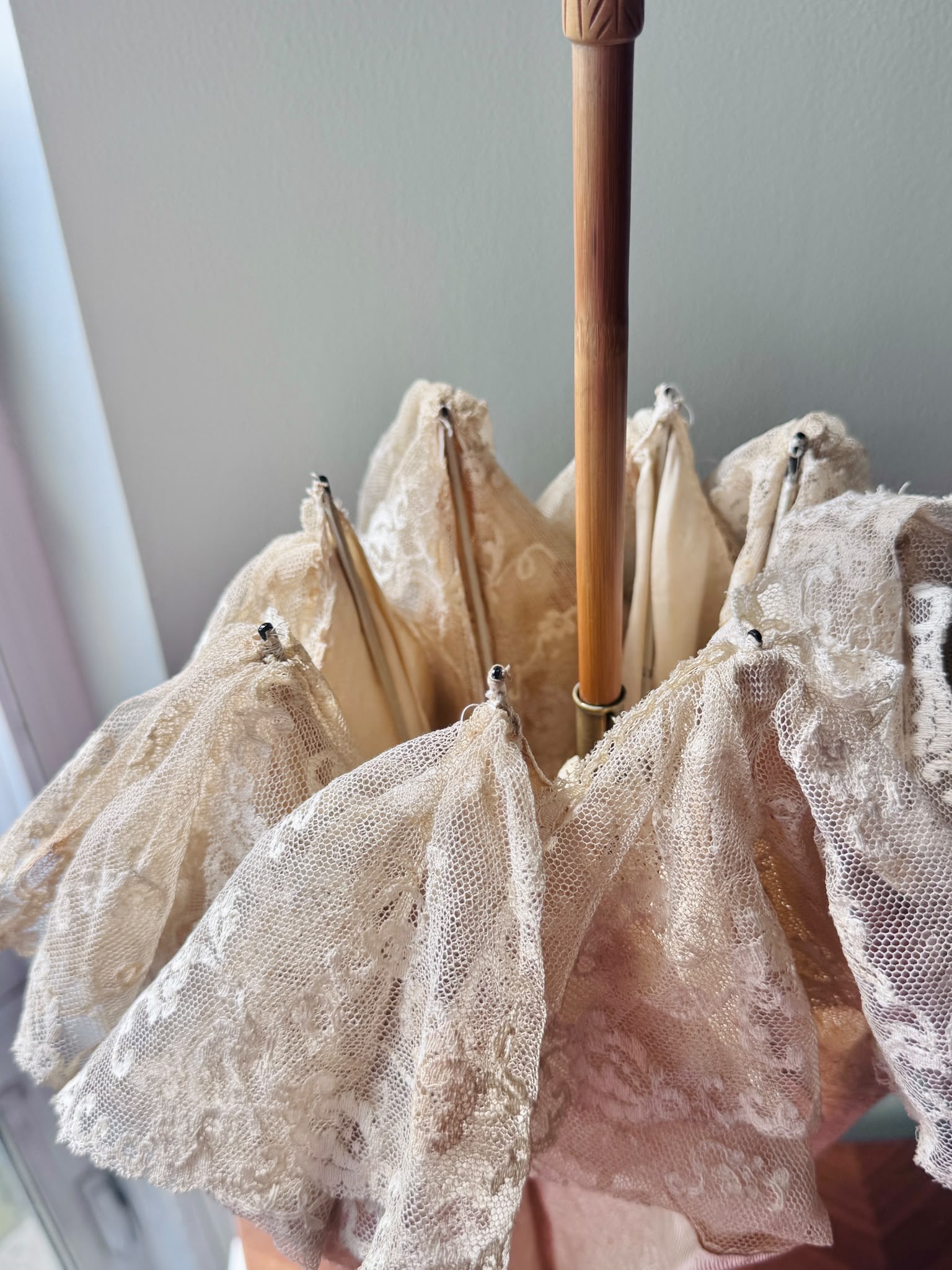
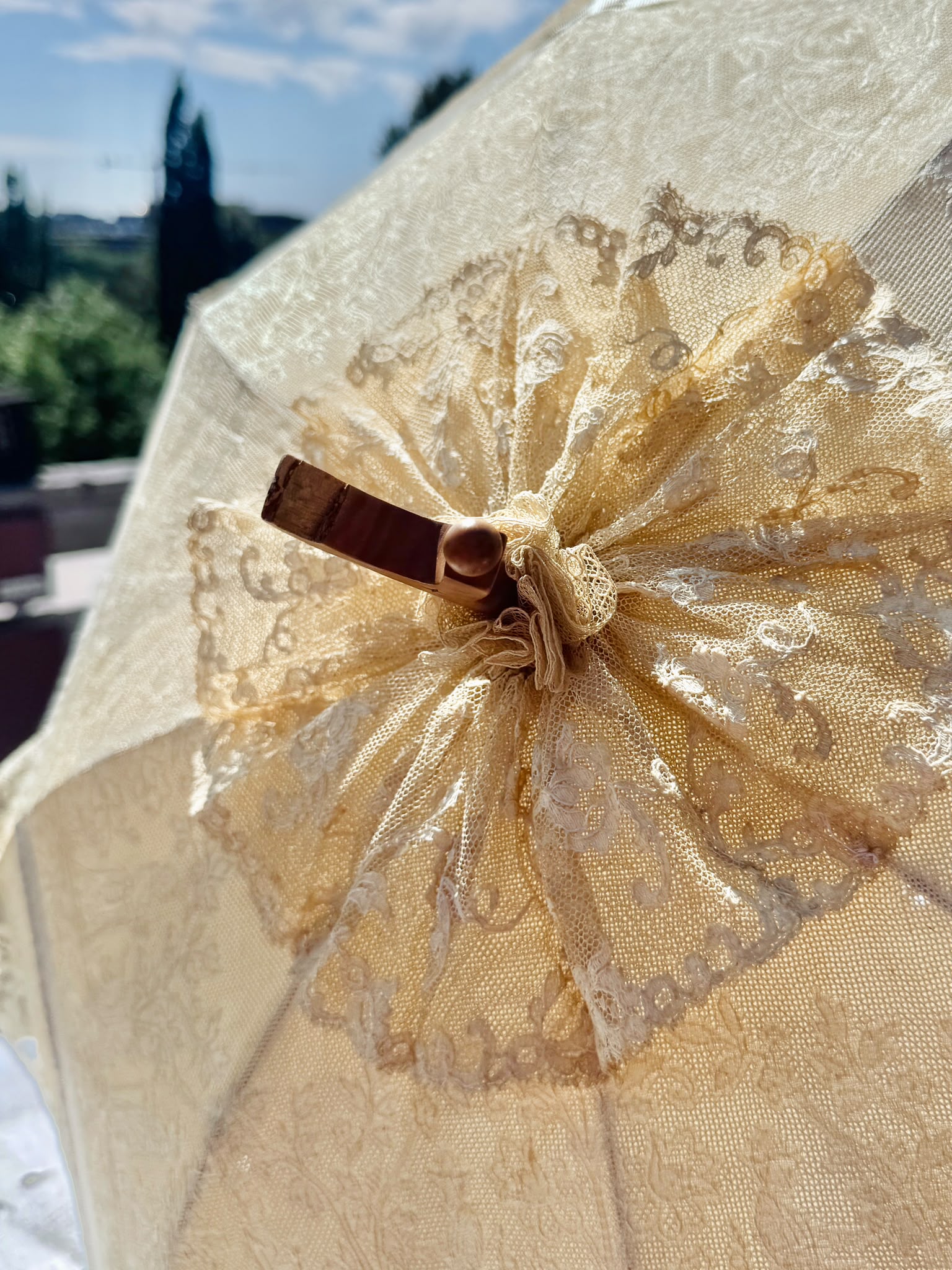
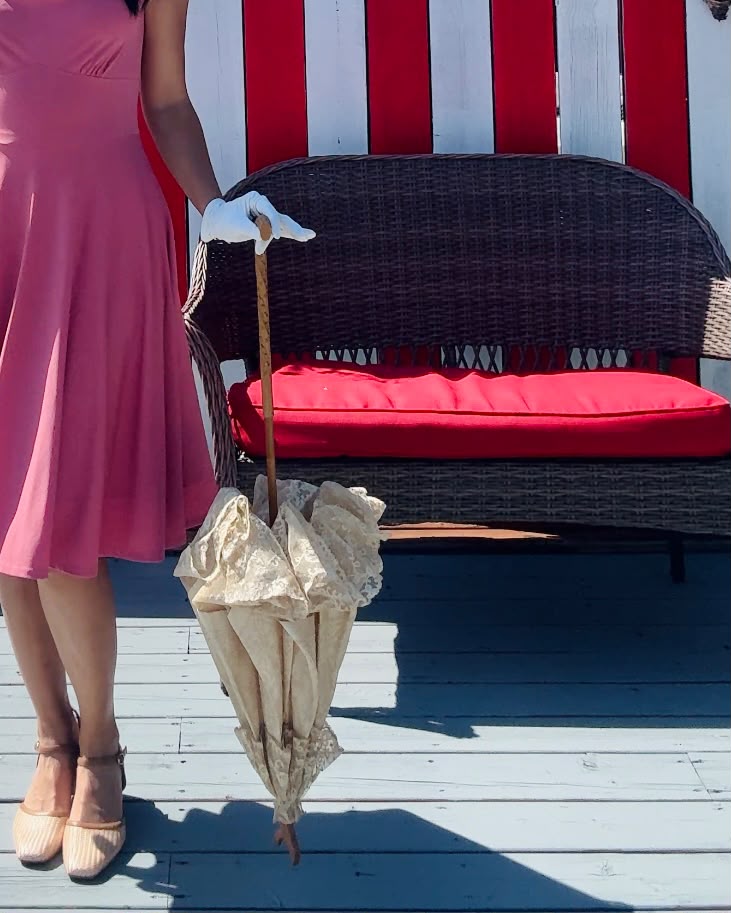
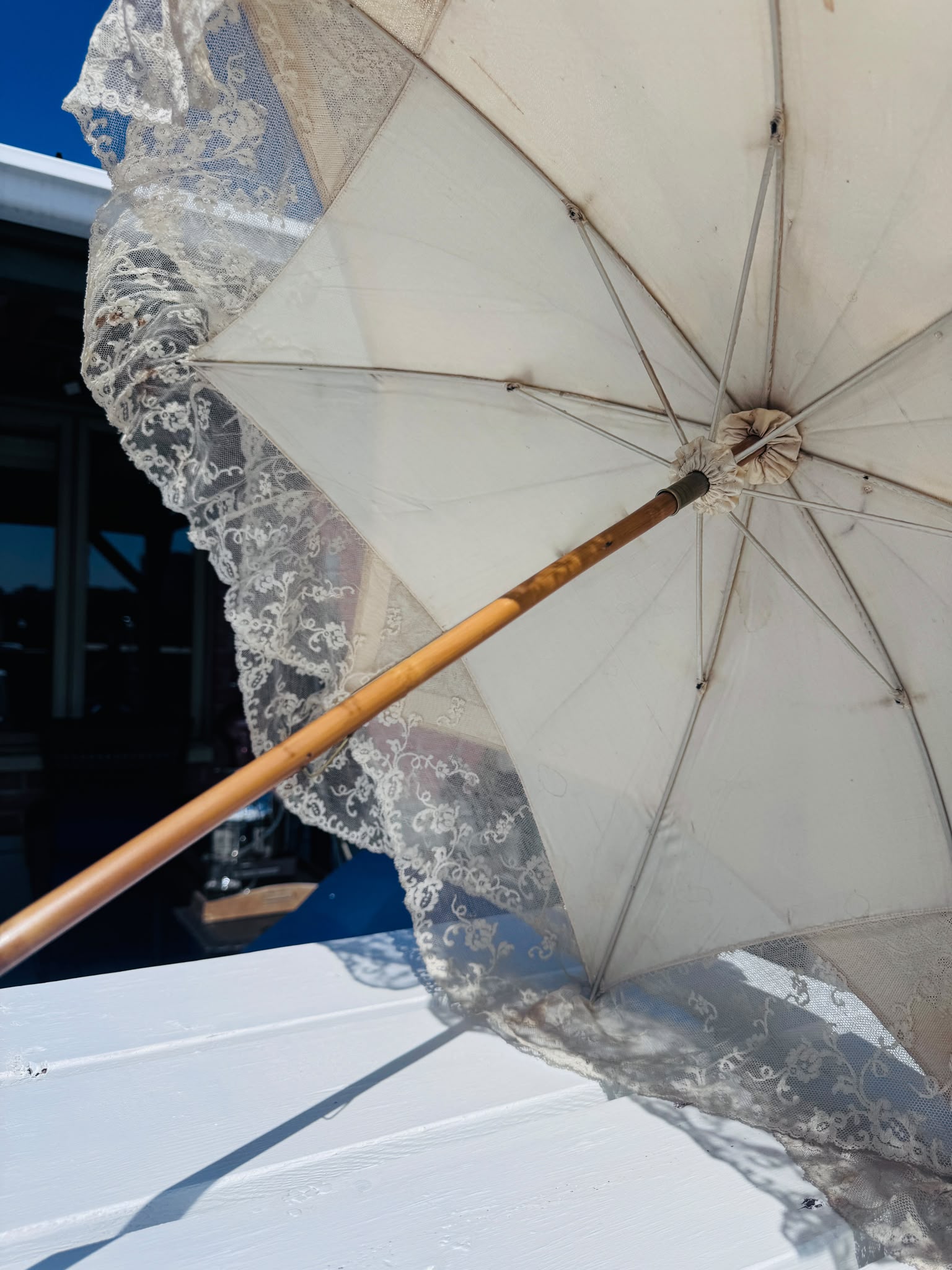
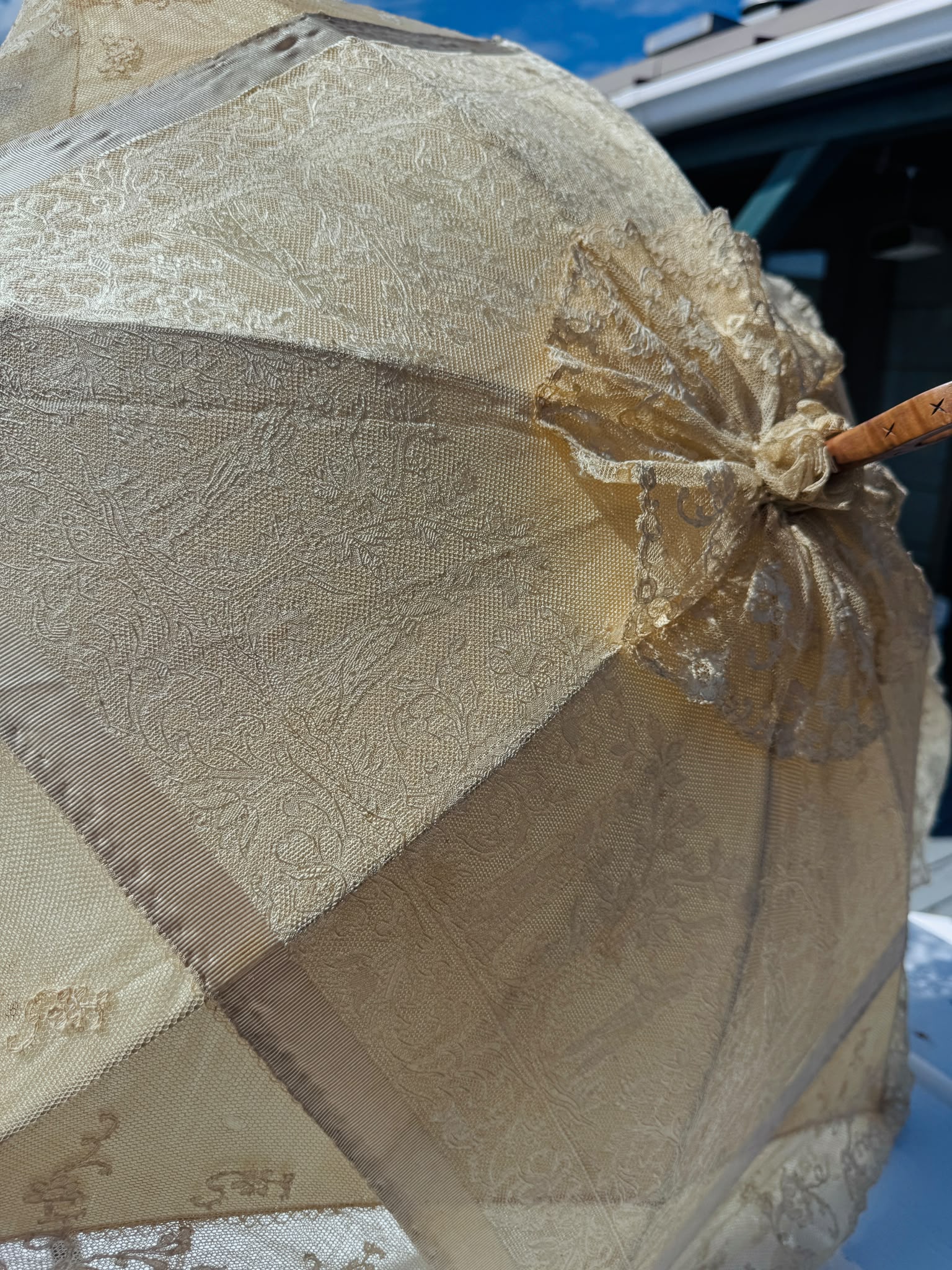
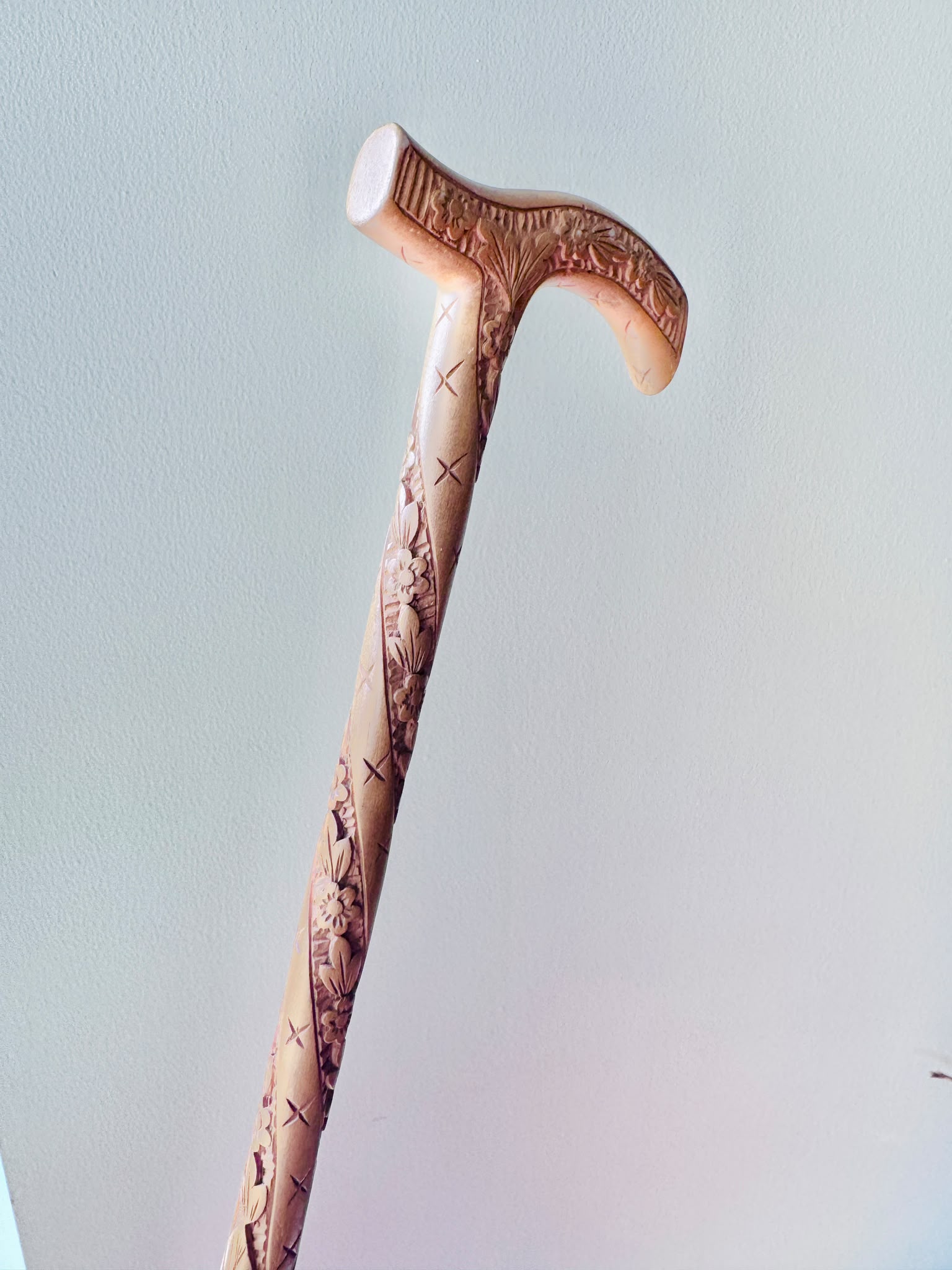
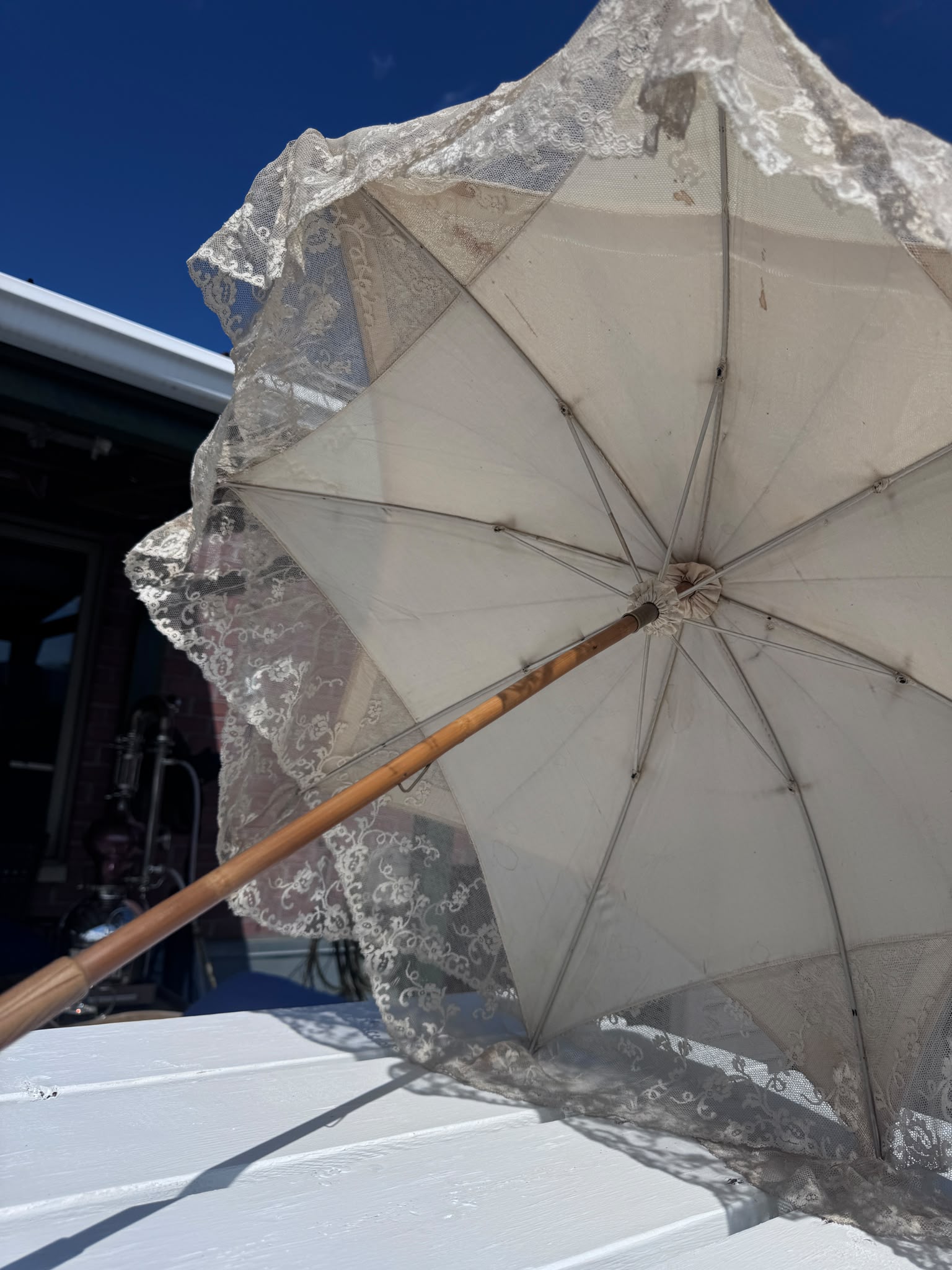
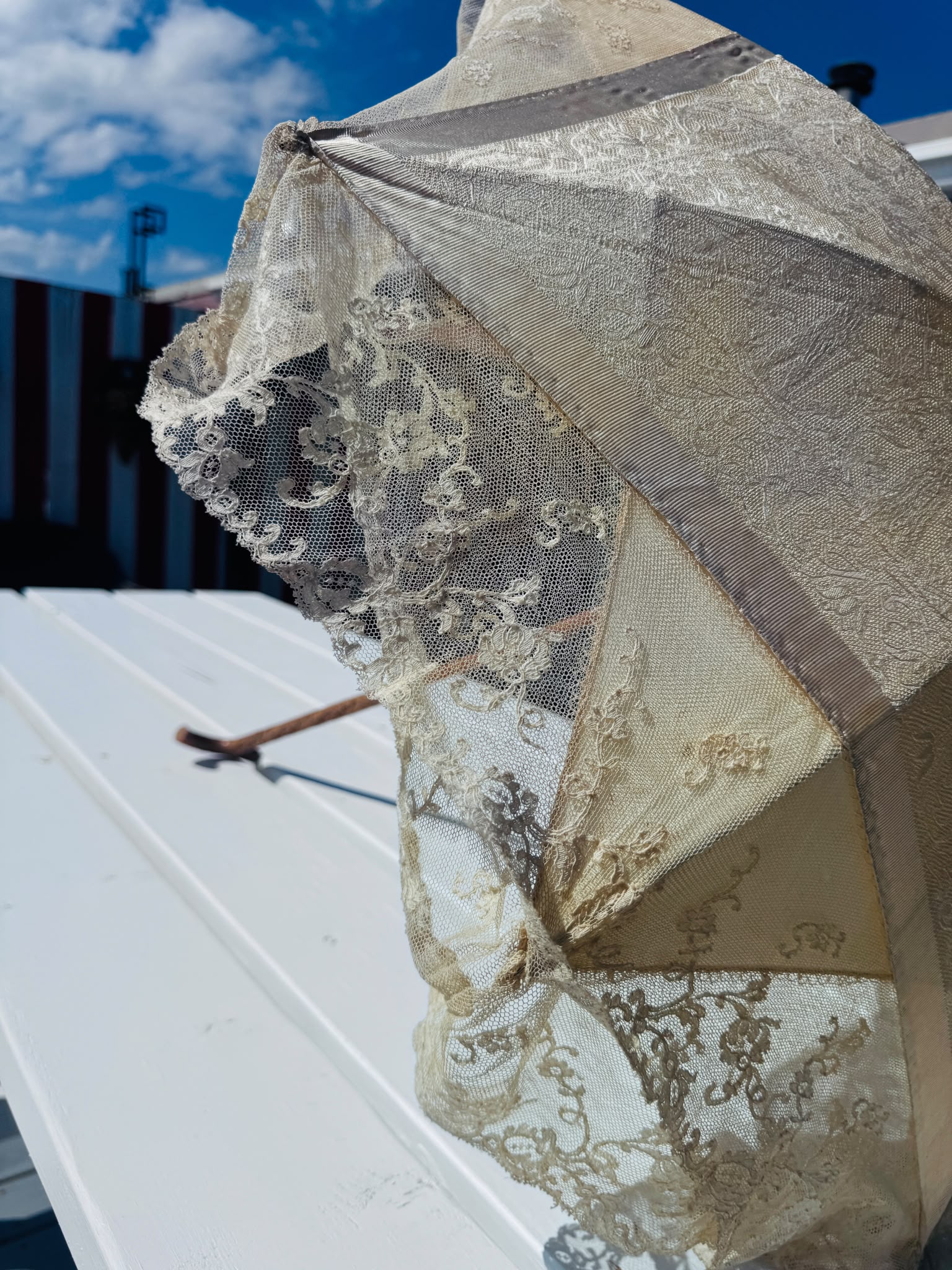
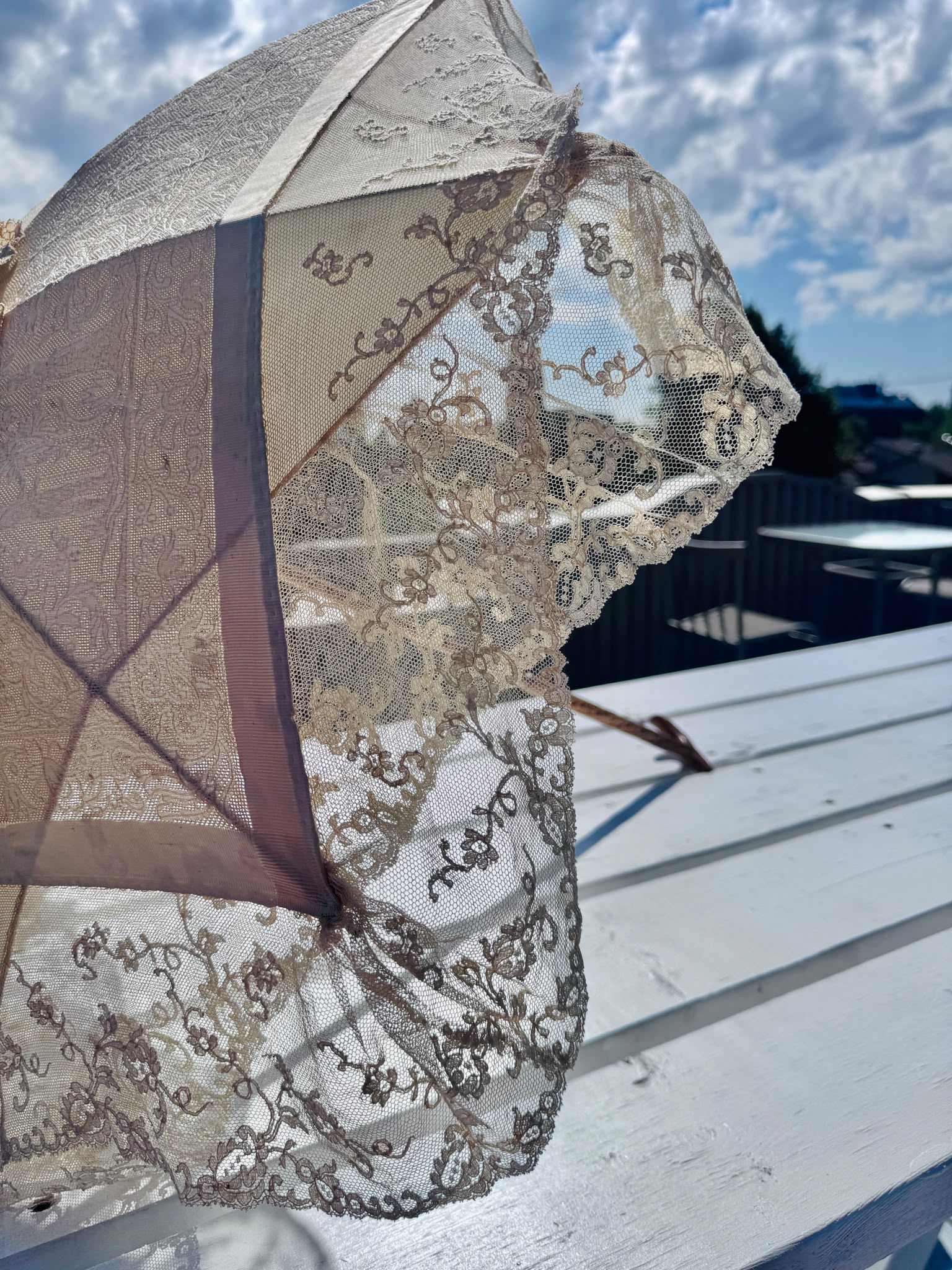
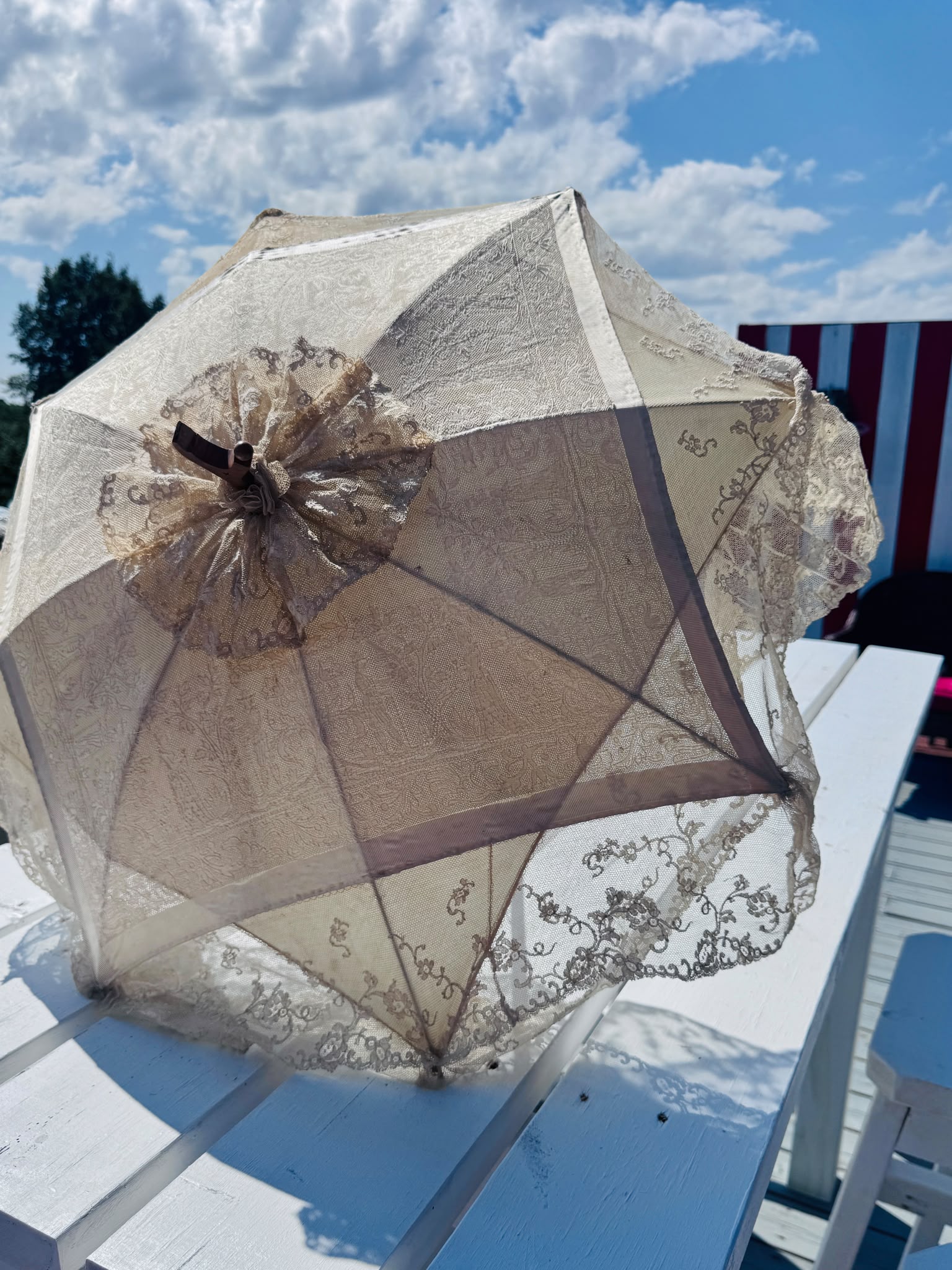
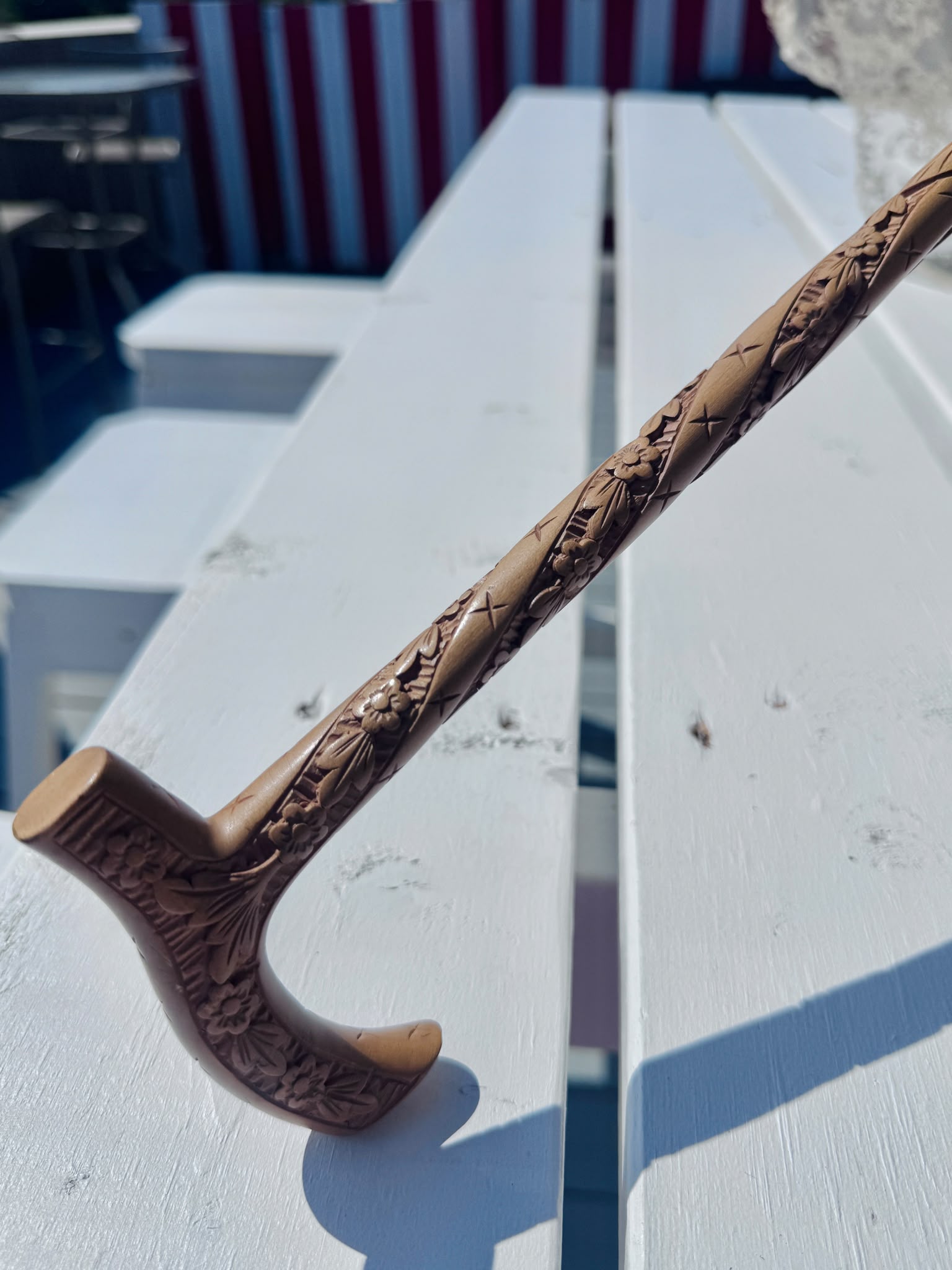
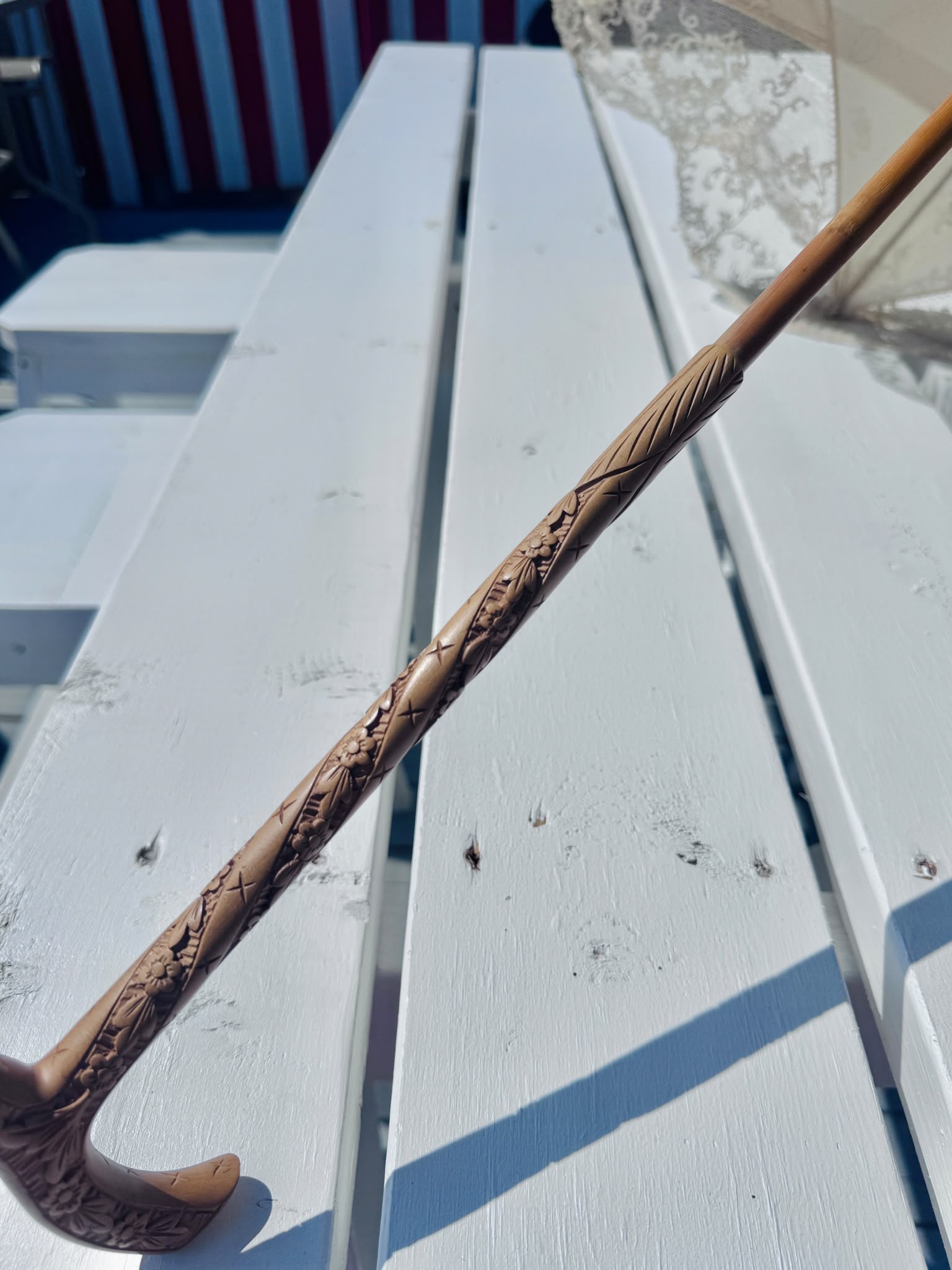
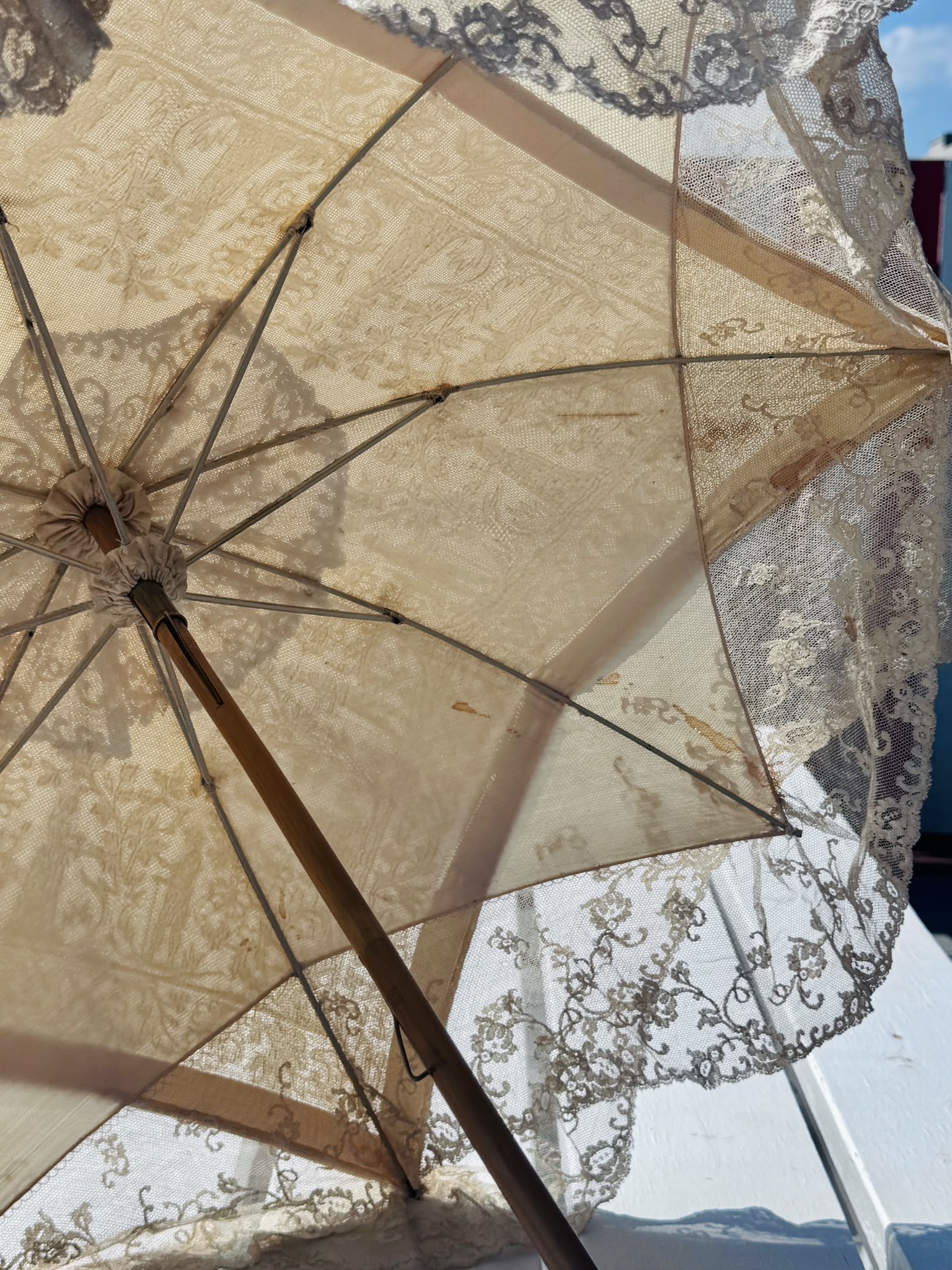
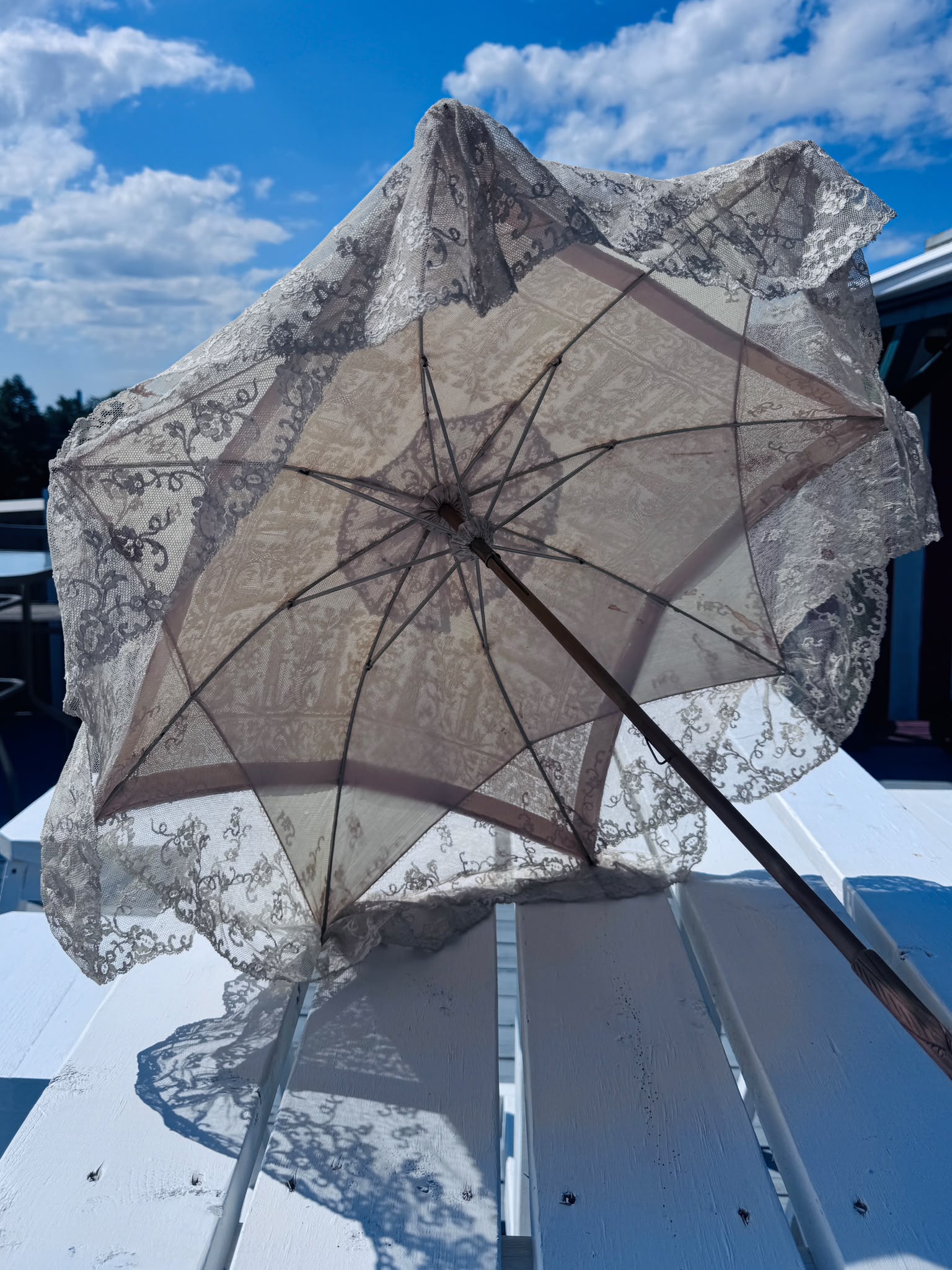
An exceptionally romantic late Victorian to Edwardian ladies’ parasol, dating approximately to c. 1890–1915, with an elaborate ivory-toned lace canopy and beautifully carved wooden handle.
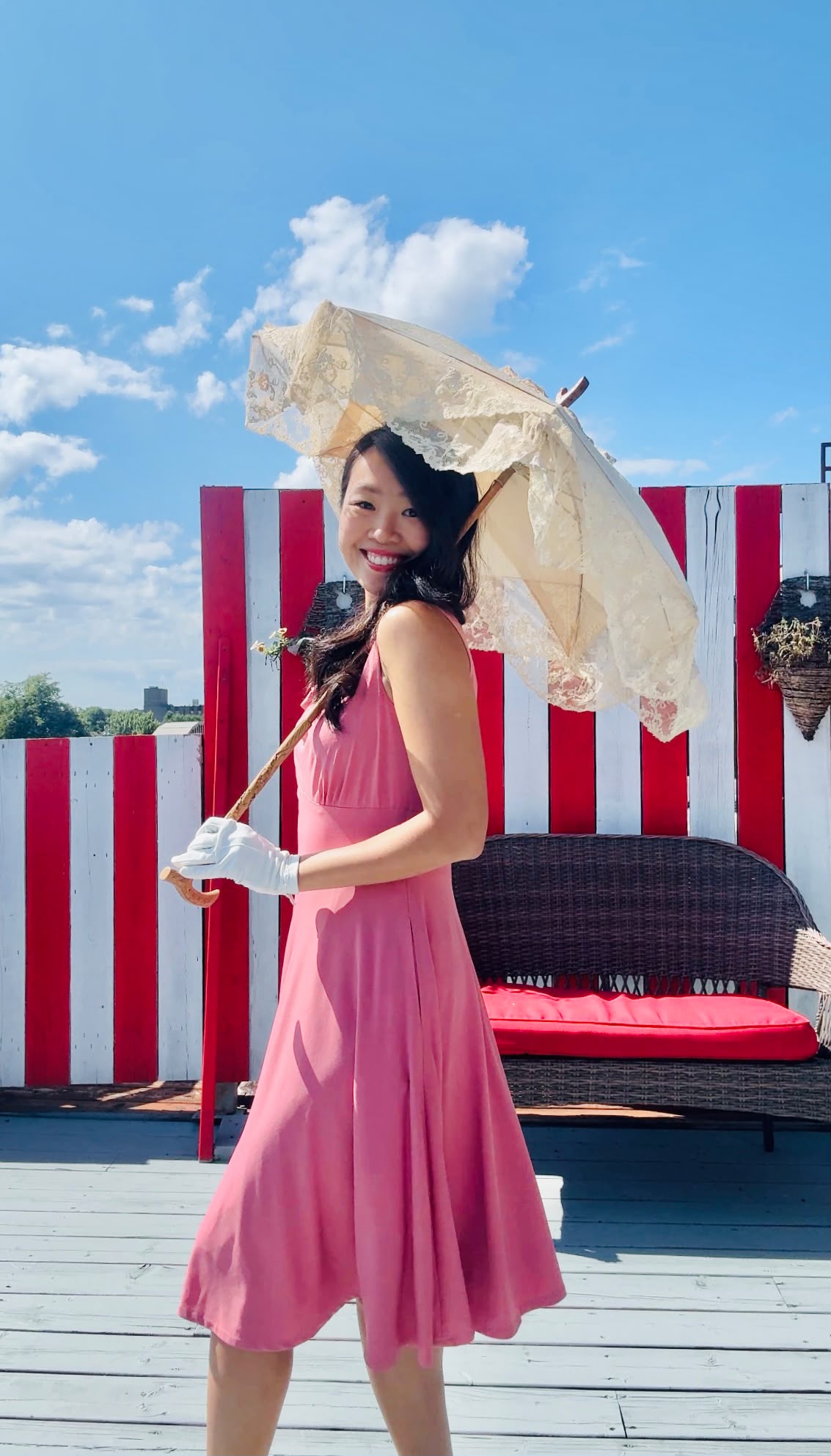
At the turn of the 20th century, a parasol was an important part of a fashionable woman’s outdoor wardrobe. It provided shade from direct sunlight at a time when a pale complexion was fashionable among many middle- and upper-class women, but it was also very much an accessory to be seen—carried on promenades and outings alongside elaborate dresses, hats and gloves.
This explains why parasols could be so decorative. Rather than the practical waterproof fabrics associated with umbrellas, fashionable examples incorporated delicate lace, sheer textiles, embroidery, ribbons and ornamental handles. Their purpose was as much about completing a lady’s silhouette and displaying taste as providing shade.
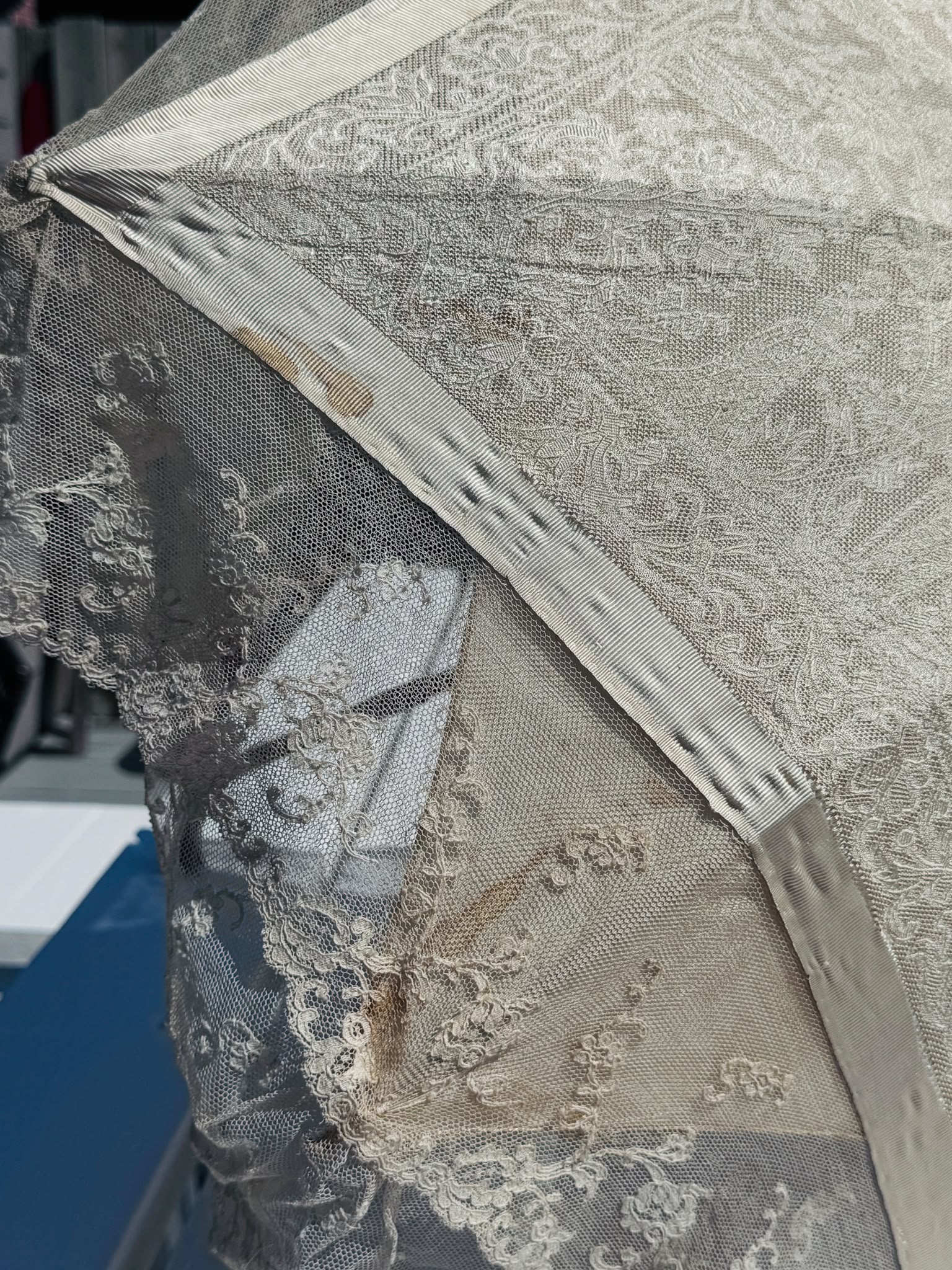
This example is particularly charming for its richly patterned ivory-toned canopy, generous floral lace edging and gathered lace rosette. Its long wooden shaft terminates in an unusually decorative carved floral handle, turning an everyday object into a piece of wearable craftsmanship.
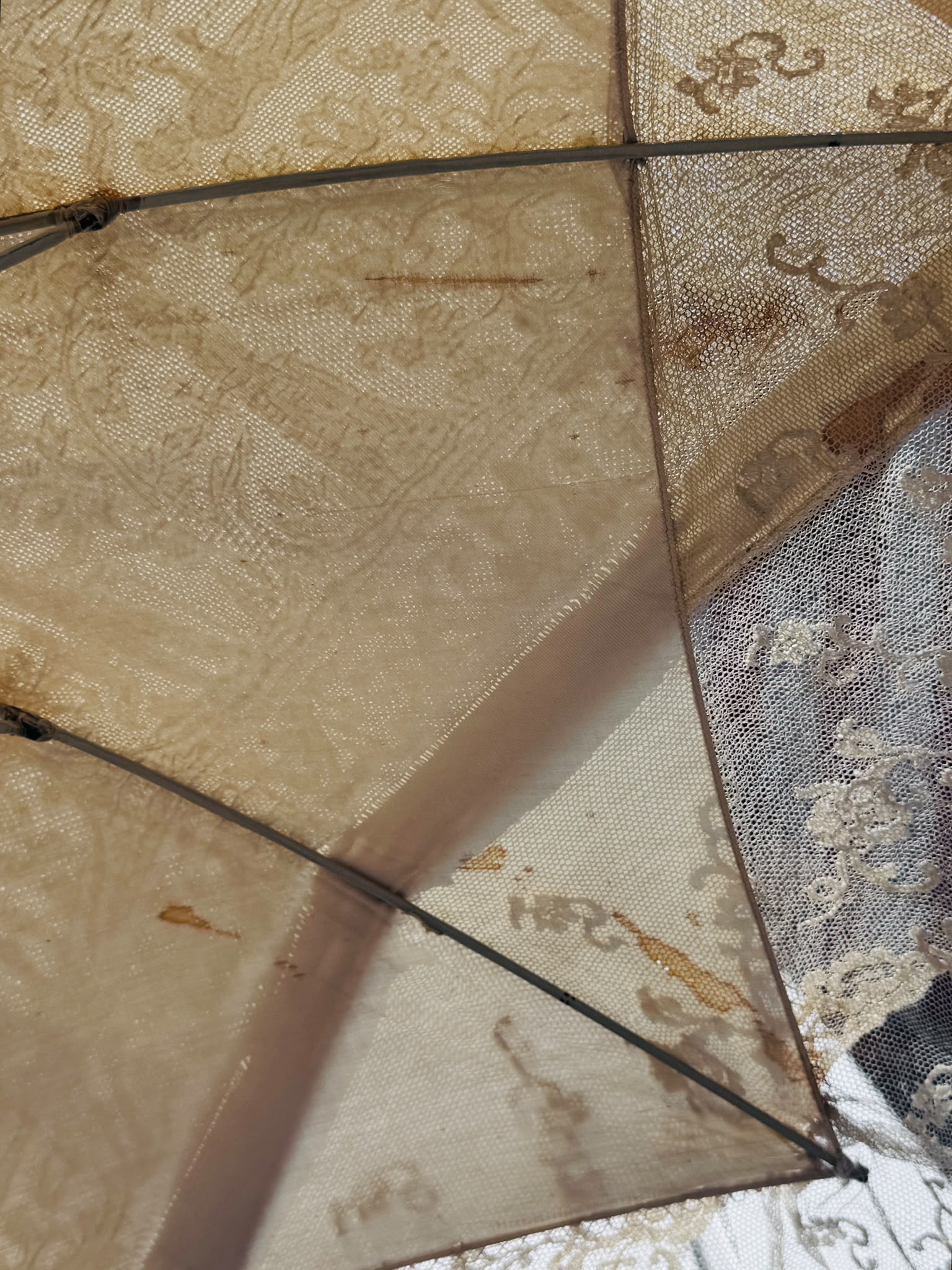
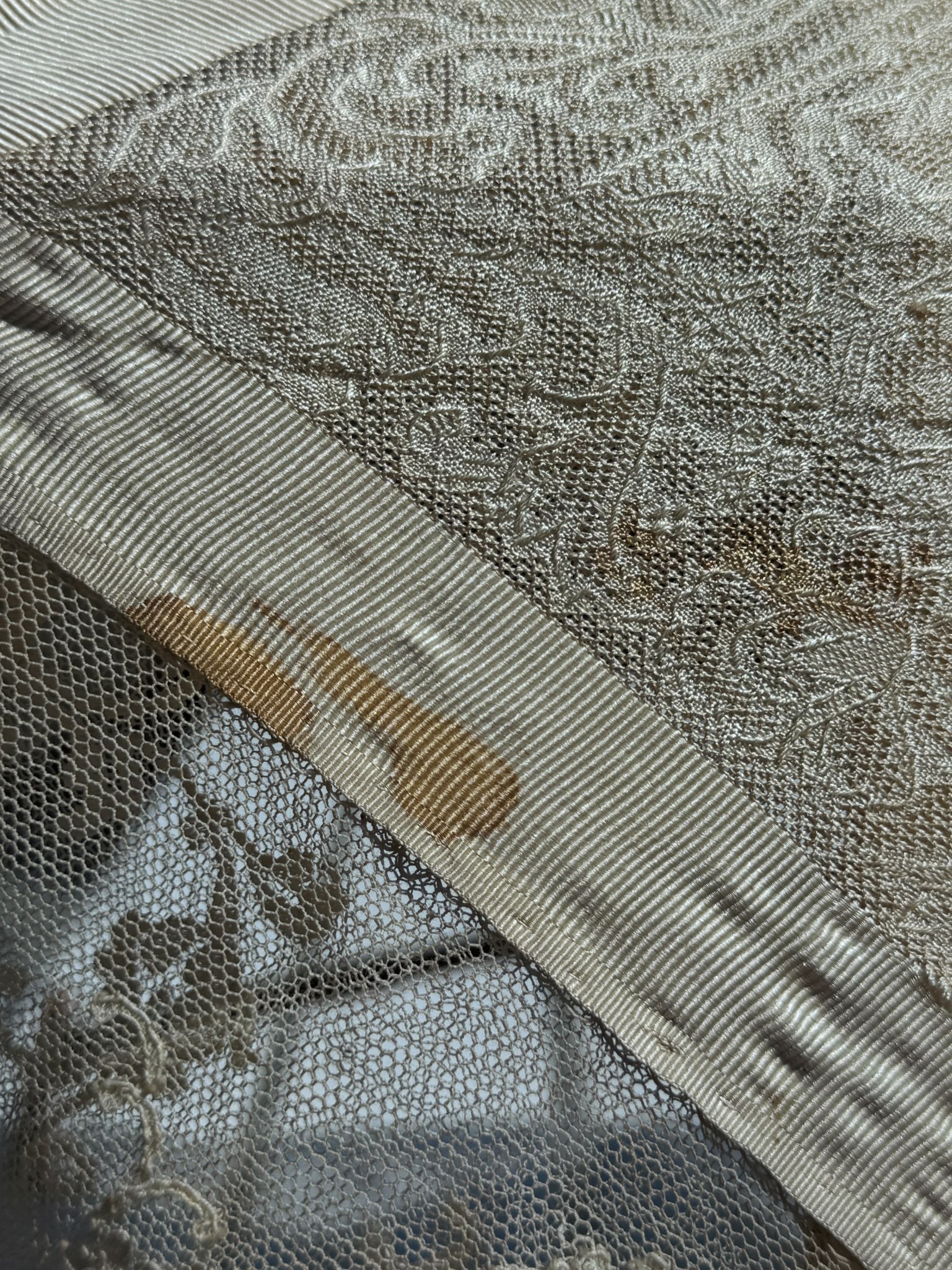
More than a century later, the textile has naturally developed staining, discolouration and a warm antique patina, together with areas of wear to the exceptionally delicate lace. We have deliberately chosen not to wash or chemically whiten the fabric. Antique lace becomes increasingly fragile with age, and aggressive cleaning can weaken the fibres, distort the textile or permanently damage the original material.
The softly aged ivory tone is also part of its beauty and history—we prefer preserving the character of the original textile rather than attempting to make a century-old parasol look new.
Complete antique parasols with their original lace, framework and decorative carved handles are increasingly difficult to find, making surviving examples highly collectible pieces of fashion and social history.